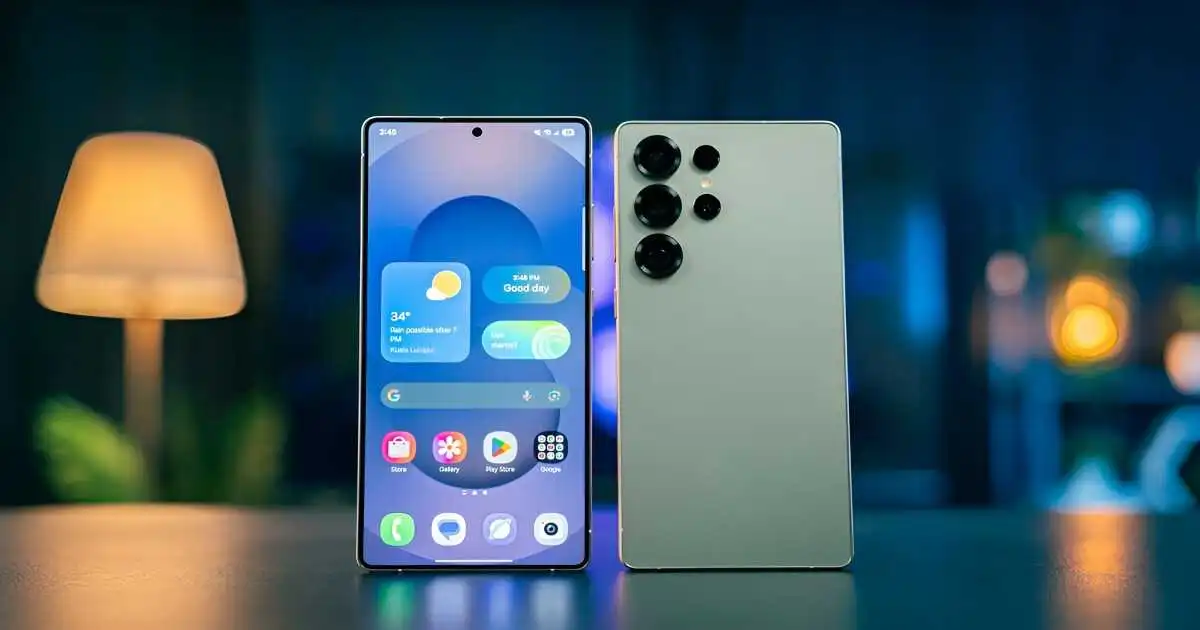
Every year, Samsung raises the bar with its Galaxy S series, and 2026 is no exception. The Galaxy S26 series — consisting of the S26, S26+, and S26 Ultra — aims to redefine the flagship smartphone experience.
This isn't just about incremental upgrades. Samsung is betting big on privacy, performance, and on-device AI. Imagine checking your bank balance in a crowded space without worrying about prying eyes, or capturing low-light photos that rival dedicated cameras. That's the core promise of the S26 series.
Note: As with all technology projections, final product specifications and features may change before the official commercial release.
The numbers that matter
Based on Samsung's announcements and preliminary supply chain information, the Galaxy S26 series targets impressive performance metrics:
Samsung is scheduled to unveil the S26 series at Galaxy Unpacked on February 25, 2026, with a global rollout expected in early to mid-March.
However, some industry analysts argue that this new privacy display technology may face significant manufacturing yield challenges, which could limit its availability in the first production batches or affect the final retail price.
Meet the Galaxy S26 series: Three models, one vision
Samsung has streamlined its lineup to three distinct models, each targeting different user needs:
Galaxy S26
- Positioned as the base flagship for most users, it aims to offer a balanced mix of performance, camera quality, and affordability with all the essential new features.
Galaxy S26+
- This is the mid-tier powerhouse, featuring a larger screen and enhanced battery life for users who want more without jumping to the Ultra's premium price point.
Galaxy S26 Ultra
- The premium flagship champion introduces the headline privacy display technology, a professional-grade 200MP camera system, and top-tier specifications for power users. Market tracking data suggests this model will account for the majority of Samsung's high-end volume.
Display & privacy: The Flex Magic Pixel revolution
The S26 Ultra introduces a built-in privacy display, a feature not yet seen in mainstream smartphones. It uses what Samsung calls Flex Magic Pixel technology.
Key Flex Magic Pixel Features
- Side-angle protection: The screen becomes difficult to read from any significant side angle.
- Localized privacy: Users can designate sensitive apps, like banking or messaging, to automatically trigger the privacy mode.
- Smart automation: The system can activate privacy mode based on context, such as when connected to public Wi-Fi.
- Customizable protection: Users maintain granular control over which apps or screen areas are protected.
Display specifications comparison
The display technology varies significantly across the three models.
Galaxy S26 Display
- 6.3" Dynamic AMOLED 2X
- 120Hz adaptive refresh rate
- 1200 nits peak brightness
- Full HD+ resolution
Galaxy S26+ Display
- 6.7" Dynamic AMOLED 2X
- 120Hz LTPO technology
- 1300 nits peak brightness
- Quad HD+ resolution
S26 Ultra Privacy Display
- 6.9" Dynamic LTPO AMOLED 2X
- 120Hz adaptive refresh
- 3000 nits peak brightness
- Flex Magic Pixel technology
Performance & software: AI-powered intelligence
Samsung is continuing its dual-chip strategy for global markets:
- Snapdragon 8 Elite Gen 5:Expected to power the S26 series in the US, Canada, and parts of Asia.
- Exynos 2600:Likely to be the variant for European and other global markets, featuring AMD RDNA graphics.
The S26 series will run One UI 8.5 on Android 16. Early indicators show a strong focus on on-device AI capabilities.
Privacy & Security
- Context-aware privacy controls that learn user behavior.
- Automatic display protection triggers.
- On-device AI processing to keep sensitive data local.
- Real-time threat detection.
AI Intelligence
- AI call alerts and advanced spam detection.
- On-device smart summaries for emails and messages.
- Intelligent battery management that predicts usage patterns.
- Predictive power optimization to extend battery life.
Some analysts note that the real-world performance difference between the Snapdragon and Exynos variants remains a point of contention among enthusiasts, with past generations showing variance in battery efficiency and sustained performance.
Camera system: Professional photography
The Galaxy S26 Ultra pushes mobile photography with its advanced quad-camera system, though its full potential will depend on software optimization.
Samsung claims this is the largest sensor in a smartphone, using advanced pixel-binning to capture more light for superior low-light performance.
A high-resolution wide-angle lens with improved distortion correction for landscape and architectural shots.
A dual telephoto system offering a versatile range for both portrait photography and long-range zoom capabilities.
Includes a new Night Mode, AI scene optimization, and professional-grade video stabilization. If supply chains allow for the premium sensor components, this could be a significant differentiator.
Battery & charging: All-day power
Battery specifications vary by model, with the Ultra expected to feature the largest capacity.
Galaxy S26
- 4200 mAh battery capacity
- 60W wired fast charging
- 25W wireless charging
Galaxy S26+
- 4900 mAh battery capacity
- 60W wired fast charging
- 25W wireless charging
Galaxy S26 Ultra
- 5000-5400 mAh battery (final capacity still unconfirmed)
- 60W wired fast charging
- Qi2 magnetic wireless charging support
Pricing & storage options
Pricing remains a critical factor, and these projections may change based on component costs and market conditions.
Estimated Price Breakdown
Galaxy S26: $799 (128GB) | $849 (256GB)
Galaxy S26+: $999 (256GB) | $1,099 (512GB)
Galaxy S26 Ultra: $1,299 (256GB) | $1,399 (512GB) | $1,599 (1TB)
*Estimated US pricing. Actual prices may vary by region, carrier, and final feature set.
Galaxy S26 vs competitors
A potential counterargument is that Apple's ecosystem lock-in and Google's software-first approach remain powerful draws. The success of Samsung's hardware innovations will ultimately depend on how well they integrate into a seamless user experience.
Best For Privacy & Photography
Galaxy S26: If the privacy display works as advertised and the 200MP camera delivers on its promise, it will be the clear choice for security-conscious users and photography enthusiasts.
Best For Ecosystem Integration
iPhone 16 Pro: Seamless Apple ecosystem integration and consistent, refined performance remain its core strengths.
Best For AI & Software
Pixel 8 Pro: Google's pure Android experience, first-access to new AI features, and computational photography excellence create a compelling alternative.
Industry Counterargument: Is the privacy display ready?
While the Flex Magic Pixel display is a compelling innovation, industry experts are still debating its real-world practicality. The primary concern is manufacturing complexity, which could lead to higher costs or lower yields.
- Main claim: Privacy display is a revolutionary feature.
- Supporting analysis: If successful, it solves a real user problem and creates a unique selling point.
- Possible challenge: Early units could suffer from reduced brightness or color accuracy when privacy mode is active.
- Market risk: Competitors could argue that a physical privacy screen protector offers the same benefit without the increased device cost.
Why the Galaxy S26 series matters
Key Takeaways
Final analysis
The Samsung Galaxy S26 series is positioning itself as a privacy-focused, AI-smart, photography-centric powerhouse. It directly addresses growing user concerns about digital security in an increasingly public world. The question is no longer just about hardware specs, but about execution: can Samsung deliver on the promise of seamless privacy without compromising the core smartphone experience? If the technology performs as hoped and supply chains remain stable, Samsung may have set a new benchmark.
Samsung isn't just keeping up with the competition—it's attempting to set a new standard. The Galaxy S26 series represents a potential future for smartphones: more secure, more intelligent, and more capable. The market's response in March will be the true test.