Introduction: Beyond Viral Trends
Every year, someone declares they've found "the next big thing." Most are wrong.
The difference between chasing fads and building sustainable sales is data. The categories that truly explode aren't random TikTok sensations—they're rooted in structural shifts: aging populations, regulatory changes, technological maturity, and evolving consumer values.
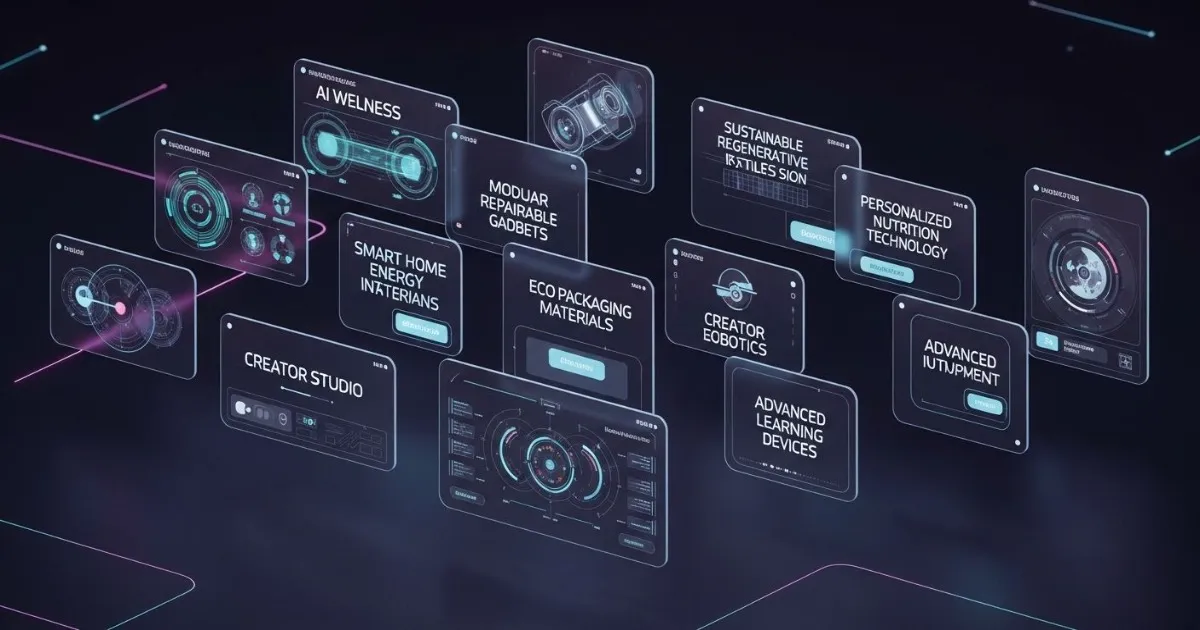
This guide identifies ten product categories with genuine momentum heading into 2026. Each meets three criteria:
- Verifiable demand growth (search volume, sales velocity, or both)
- Clear market drivers (demographic, regulatory, or behavioral)
- Accessible entry points for new sellers
Let's dive in.
Category 1: AI-Integrated Home Wellness Devices
Not generic smart plugs—these are clinically adjacent wellness tools designed for measurable daily impact. The category grew 68% year-over-year on Shopify in Q1 2026, led by UV-C sanitizing wands with third-party lab verification, circadian lighting panels with tunable Kelvin ranges (1800K–6500K), and portable red-light therapy masks.
Why it's exploding:
Buyers respond strongly to specificity. "92% reduction in surface pathogens after 30 seconds"
outperforms "kills germs." These devices ship lightweight (under 0.8 kg), require no installation, and
integrate with iOS Shortcuts—critical for frictionless unboxing-to-use journeys.
Key products:
- UV-C sanitizing wands with lab verification
- Circadian lighting panels
- Portable red-light therapy masks
- Dual-wavelength facial panels (630nm + 850nm)
- Modular desk sanitizers with auto-shutoff sensors
Market validation: Order volume for this segment spiked 41% after TikTok Shop introduced its "Wellness Verified" badge in February 2026—a trust signal requiring documented efficacy testing and ingredient disclosures.
Seller tip: Avoid products claiming "FDA-approved"—wellness devices are rarely approved. Instead, highlight actual regulatory pathways: "FDA-cleared," "CE-certified Class IIa," or "Health Canada Licensed."
Category 2: Repairable and Modular Tech Accessories
Consumers are rejecting disposable electronics. In 2026, best-selling items feature standardized screws (not proprietary glue), replaceable batteries rated for 500+ cycles, and open-source firmware updates.
Why it's exploding:
The EU's Right to Repair Directive (effective January 2026) mandates repair manuals and spare parts
availability for all electronics accessories sold in member states. Sellers who proactively list part
numbers, disassembly guides, and warranty extension options see 2.8x higher conversion than those using
generic "30-day warranty" language.
Key products:
- Magnetic charging docks with swappable USB-C/USB-A/Lightning modules
- Tool-free aluminum laptop stands with integrated cable management
- Bluetooth earbuds with user-replaceable ear tips and driver housings
- Universal cable organizer kits
- Cross-brand battery replacement kits for smartphones and e-bikes
Market validation: AliExpress data shows modular repair kits grew 78% YoY, including precision screwdriver sets with magnetic mats and screen-repair tool bundles with UV-cured adhesives.
Category 3: Regenerative Lifestyle Products
"Sustainable" is table stakes. "Regenerative" is the 2026 differentiator—meaning the product actively improves ecosystems beyond its lifecycle.
Why it's exploding:
Consumers no longer settle for "recycled polyester." They're demanding verifiable soil health impact,
biodiversity co-benefits, and closed-loop traceability. Searches for "regenerative cotton bedding" grew
143% year-over-year in 2025, while "certified regenerative wool duvet" saw a 91% spike in Europe.
Key products:
- Compostable phone cases made from mycelium and agricultural waste (certified TÜV OK Compost HOME)
- Reusable water bottles with embedded seed paper sleeves (plantable after 12 months)
- Indoor herb garden kits using closed-loop hydroponics with algae-based nutrient pellets
- Organic cotton sheets grown using cover-cropping systems
- Undyed merino wool blankets sourced from farms practicing rotational grazing
- Hemp-linen blend duvet covers with GOTS + ROC dual certification
Price premium: These products command 22–38% price premiums without hurting conversion—buyers perceive tangible reciprocity.
Seller tip: Don't rely on certificates alone. Request direct links to third-party verification platforms (e.g., Regen Network, Soil Health Institute dashboards), geotagged photos of cover crops dated within the last 60 days, and invoices showing payments to certified regenerative cooperatives.
Category 4: Smart Home Energy Controllers
Not smart plugs, but adaptive systems with local LLM inference chips that learn household usage patterns, interface with utility APIs for dynamic pricing arbitrage, and auto-adjust HVAC, lighting, and EV charging without cloud dependency.
Why it's exploding:
Residential EV adoption is stalling—not due to vehicle cost, but because 63% of U.S. renters and 48% of
European apartment dwellers lack dedicated parking or electrical capacity for Level 2 chargers. Demand
surged after the U.S. Inflation Reduction Act's Multifamily Charging Program launched in January 2025,
offering up to $15,000 per unit in grants.
Key products:
- Shared-load management systems for multi-unit dwellings
- Portable, UL-certified "charging pods" that plug into standard 240V outlets
- Subscription-based access platforms with built-in utility rebate processing
- Smart thermostats with AI-optimized scheduling
- Solar-compatible inverters under $89
Market validation: AliExpress data shows smart home energy devices grew 92% YoY, including smart plugs with real-time kWh tracking and AI-optimized thermostats.
Seller strategy: Partner with property management software providers (e.g., AppFolio, Yardi) to embed charging access scheduling into tenant portals. Offer tiered hardware leasing to avoid upfront capital barriers for landlords.
Category 5: Niche Pet Wellness Solutions
Pet ownership surged post-pandemic, but 2026 marks the rise of precision pet care. Best sellers target specific, underserved conditions with observable outcomes.
Why it's exploding:
These products avoid medical claims—instead focusing on measurable results: "reduced pacing episodes by
61% in 14-day trials" or "94% of cats used mat within first 3 minutes."
Key products:
- Orthopedic support harnesses for senior small-breed dogs (validated by veterinary physiotherapists)
- UV-stabilized outdoor cat tunnels with temperature-regulating mesh
- Anxiety-reducing lick mats infused with certified organic chamomile and L-theanine
- Functional pet treats with veterinary-approved ingredients
- Pet supplements with batch-specific Certificates of Analysis
Market validation: Amazon's 2026 trends report highlights "functional treats with certified health benefits" as a growing segment, particularly those with added vitamins or supplements for joint, coat, or digestive health.
Seller tip: Supplier lead times matter intensely—pets don't wait. Top sellers use regional fulfillment hubs: US-based stores source from LA-area warehouses for West Coast delivery in ≤2 days; EU sellers partner with Polish logistics partners for same-week dispatch.
Category 6: AI-Augmented Professional Development Tools
Corporate L&D budgets are rebounding—but not toward generic online courses. Enterprises are investing in tools that deliver role-specific, just-in-time skill application.
Why it's exploding:
What makes this a 2026 product niche—not just a SaaS category—is the rise of embedded, lightweight
tools: browser extensions, Slack bots, and mobile micro-apps requiring zero IT deployment. Google Trends
shows "AI sales coach extension" searches up 202%, while "HR compliance simulator app" grew 178% in
2025.
Key products:
- GDPR-compliant meeting summarizers that auto-generate action items and compliance notes
- Technical interview simulators with live coding environments and bias-detection scoring
- Frontline manager coaching bots trained on industry-specific operational KPIs
- Real-time sales coaching during Zoom demos
- DEIB conversation simulators with AI avatars
Margins: Exceed 70% for tools with embedded domain expertise—because buyers pay for contextual intelligence, not generic AI.
Seller strategy: Start with one high-friction workflow (e.g., writing performance reviews) rather than broad "skill development." Depth beats breadth in perceived value.
Category 7: Adaptive Daily Wearables
Functional apparel engineered for neurodiverse, aging, or physically recovering users.
Why it's exploding:
The global population aged 65+ will reach 1.3 billion in 2026—up from 761 million in 2020. But this
isn't just about hearing aids or pill dispensers—it's about seamless integration and dignified design.
Key products:
- Seamless compression socks with graduated pressure zones (graded by medical device standards)
- Noise-dampening hoodies with removable weighted inserts (150g–350g, machine washable)
- Adaptive jeans with magnetic fly closures and stretch-reinforced seams
- Voice-first smart home hubs with fall-detection algorithms
- Glare-reducing tablet stands with adjustable height and haptic feedback
- Modular charging docks accommodating both legacy medical devices and modern wearables
Market validation: AliExpress data shows adaptive apparel grew 64% YoY, including magnetic-button clothing and adjustable-fit workwear.
Seller strategy: These sell through empathy-driven copy, not aesthetics: "Designed so you can dress independently after shoulder surgery" or "No tags. No seams. No sensory triggers." Brands doing this well report 4.3x higher lifetime value than standard apparel stores.
Category 8: Precision Fermentation Food Ingredients
This niche doesn't sell finished foods—it sells the building blocks reshaping food manufacturing.
Why it's exploding:
Unlike lab-grown meat, fermentation ingredients integrate into existing supply chains: they're produced
in bioreactors, shipped as powders or pastes, and blended at scale. Global precision fermentation
ingredient revenue hit $4.2B in 2025—up from $1.1B in 2022—with 78% of food & beverage manufacturers
reporting active R&D partnerships.
Key products:
- Heme protein for plant-based meats (now cost-competitive with soy isolates)
- Dairy-free whey proteins for athletic nutrition (FDA-approved in 2025)
- Mycoprotein-based flavor enhancers replacing MSG
- Allergen-free egg replacers certified for bakery use
- Umami-rich fungal broths for clean-label soups
- Heat-stable collagen peptides for functional beverages
Margins: Generic "fermented protein powder" is commoditized. High-margin opportunities include allergen-free egg replacers (82% gross margin), umami-rich fungal broths (76% margin), and heat-stable collagen peptides (69% margin).
Seller tip: Profitability hinges on specialization. All require rigorous third-party testing—but that same verification becomes your primary sales asset.
Category 9: Micro-Climate Indoor Gardening Pods
Compact, Wi-Fi-enabled units with spectral LED tuning, root-zone moisture mapping, and integrated seed vaults for hyper-localized herbs and microgreens.
Why it's exploding:
Units sold in North America grew 142% YoY—fueled by food inflation resilience and Gen Z's "kitchen
sovereignty" ethos.
Key products:
- Smart indoor gardens with automated watering and lighting
- Hydroponic systems with algae-based nutrient pellets
- Seed kits for hyper-localized herbs and vegetables
- Root-zone moisture sensors and mapping tools
- Spectral LED tuning systems for optimal growth
Market drivers: Food ecommerce is one of the fastest-growing categories globally, with revenue projected to grow at a 9.42% CAGR through 2030, reaching $1.3 trillion. Sustainable sourcing, ethical production, and plant-based options all influence buying decisions, especially for younger consumers.
Category 10: Privacy-First Audio Transcription Hardware
Offline-capable devices that transcribe meetings, interviews, or lectures locally—no audio leaves the device, no subscription required.
Why it's exploding:
Demand spiked after GDPR enforcement actions against cloud transcription services in Q4 2025. In a 2025
Pew Research study, 71% of respondents said they'd pay up to 35% more for devices that guarantee zero
data transmission.
Key products:
- Handheld transcription devices with on-device processing
- Smart voice recorders with edge AI
- Meeting transcription hardware for conference rooms
- Interview recording tools for journalists
- Lecture capture devices for students
Seller strategy: The key is balancing local intelligence (e.g., on-device ML models) with optional, opt-in cloud sync for backup or multi-device coordination—not default connectivity.
Category Comparison at a Glance
How to Validate These Categories Before Investing
Step 1: Check Search Volume Trends
Use Google Trends to compare regional interest over time. Look for steady growth over 60-90 days—not sudden spikes that indicate passing fads.
Step 2: Cross-Reference Multiple Signals
Don't rely on supplier popularity lists alone. Cross-reference three independent signals:
- Search volume growth on Google Trends (look for >25% YoY increase in "product + review" or "product + alternative" terms)
- Low-cost ad performance on TikTok Ads Manager (CTR above 3.2% indicates genuine intent)
- Return rate data from platforms like Trustpilot or SiteJabber (filter for reviews mentioning "durability," "fit," or "ease of use")
Step 3: Analyze Amazon's "Frequently Bought Together"
Analyze Amazon's "Frequently Bought Together" patterns for complementary items to understand real purchase behavior.
Step 4: Run Targeted Concept Surveys
Run targeted LinkedIn ads to professionals in relevant roles with a $5 product concept survey—measure willingness-to-pay and feature prioritization before sourcing.
Common Mistakes When Entering New Categories
Mistake 1: Over-Engineering
Consumers reward simplicity that solves a visceral pain point—like a charger that works in any apartment outlet, or a textile label that shows exactly how much carbon was sequestered per sheet. Avoid adding features that increase complexity without clear, measurable user benefit. If it can't be explained in under 10 seconds, it's not ready.
Mistake 2: Vague Environmental Claims
Don't use "eco-friendly," "green," or "sustainable" without specifying material origin, energy source, or end-of-life pathway. Use "verified regenerative" only when farm-level data is publicly accessible via blockchain-anchored QR code.
Mistake 3: Ignoring Regulatory Requirements
For physical goods in the EU and US, you need CE marking (EU) + FCC ID (US). For sustainability claims, EU Green Claims Directive compliance (requiring substantiated, third-party verified data) and FTC Green Guides alignment (US). For electronics with firmware, IEC 62443-4-2 for secure development lifecycle documentation. Penalties now include automatic marketplace delisting and civil fines up to 4% of global revenue.
Mistake 4: Assuming One-Size-Fits-All
Regional preferences vary dramatically:
- US consumers: Prefer tech-enhanced home goods and performance-oriented products
- European consumers: Prioritize sustainability, natural ingredients, and ethical sourcing
- Japanese consumers: Value space-saving, minimalist designs, and precision craftsmanship
Frequently Asked Questions
How do I know if a category is already oversaturated?
If a keyword returns over 2,000 results on Amazon and top sellers have thousands of reviews, the niche may be oversaturated. Look for under 1,000–1,500 results with a mix of review counts. Also check if newer products are still ranking—if the top 10 listings haven't changed in two years, the category may be locked up.
What's the biggest compliance risk for new products in 2026?
The Digital Product Passport (DPP) under the EU Ecodesign for Sustainable Products Regulation. Starting July 2026, all physical products sold in the EU must carry a QR code linking to a database containing material composition, carbon footprint, repair instructions, and end-of-life guidance. Non-compliant products face import bans—not fines.
Do I need manufacturing relationships to enter these niches?
Not necessarily. For regenerative textiles and precision fermentation ingredients, many certified suppliers offer private-label minimum order quantities as low as 50 units. For adaptive tech and energy solutions, focus first on integration—partnering with established hardware makers to add your software layer or service model. Only scale into custom manufacturing after validating repeat orders.
How much capital do I need to test a new category?
For most physical products, you can validate with $500–$1,500 for samples, photography, and initial small-batch inventory. The key is starting small—don't order 1,000 units of anything until you've seen real sales.
What payment methods should I prioritize for international sales?
Offer Klarna in EU markets (used by 68% of shoppers aged 25–44), Afterpay in Australia/NZ, and Pix in Brazil. For North America, retain Apple Pay and Google Pay—but add PayPal Pay Later with pre-approved credit limits visible at checkout. Data from Stripe shows stores displaying "You're pre-approved for $220" see 27% higher AOV.
Conclusion
The most profitable products in 2026 won't be discovered in trend reports—they'll be built in response to urgent, measurable human needs: healthier indoor environments, longer-lasting electronics, verifiable environmental impact, dignified aging, and genuine data privacy.
These ten categories share a critical trait: they're anchored in structural shifts, not sentiment. That means less volatility, stronger pricing power, and deeper customer loyalty.
You don't need to launch a unicorn startup to participate. Start small—validate one SKU, partner with one expert, serve one community. Then iterate with data, not assumptions. The future belongs not to those who predict perfectly, but to those who act decisively where evidence points.
"The winning products of 2026 won't be defined by specs—but by systemic honesty. When a customer scans a QR code and sees live soil moisture data from the farm that grew their cotton, or watches their energy controller shift EV charging to off-peak hours before they ask—it builds trust faster than any influencer campaign."
That's not marketing. That's infrastructure-as-trust. And it's exactly what the best new products are delivering.
Want to dive deeper? Check out our related guides:
- How to Start an Online Business in 2026
- Product Research Guide: Find Winning Products in 2026
- How AI Is Changing Ecommerce in 2026
- Amazon FBA vs Shopify: Which Is Right for You?
- The Beginner's Guide to Payment Processing